
A screeching, rattling garage door is more than an annoyance. Excessive noise can signal worn parts, energy-robbing friction, or an impending breakdown that leaves you stuck inside or out. Follow this user-friendly guide to diagnose, silence, and maintain your garage door so it glides smoothly and quietly year-round.
1. Why Garage Doors Get Noisy
-
Loose hardware – Bolts, nuts, and hinges vibrate loose over time.
-
Dry metal-on-metal contact – Rollers, tracks, and springs need periodic lubrication.
-
Worn rollers or hinges – Flat-spotted nylon wheels or rusted steel pins create grating sounds.
-
Imbalanced door – A spring under uneven tension makes the opener strain and chatter.
-
Old chain or screw-drive opener – Older motors transmit more vibration than quiet belt-drive models.
2. Tools and Supplies You’ll Need
-
Socket wrench set or adjustable wrench
-
Screwdriver set
-
White lithium-based or silicone garage-door lubricant (spray)
-
Rag and mild detergent
-
Stepladder rated for your weight
-
Safety glasses and gloves
-
Replacement nylon rollers (optional upgrade)
-
4-foot level for balance checks
3. Safety First
-
Disconnect your opener at the wall switch and pull the emergency release cord.
-
Never remove torsion-spring setscrews or center bearing plates without professional training.
-
Wear eye protection when working under tensioned parts.
-
If any part feels unstable, stop and call a qualified technician like Mr. Garage Door Repairman.
4. Step-By-Step Noise-Reduction Process
Step 1 – Inspect and Tighten Hardware
-
Climb the ladder and inspect every hinge bracket, roller stem, and track bolt.
-
Use a socket wrench to snug loose fasteners. Do not overtighten; secure just until firm.
-
Check that track brackets meet wall framing squarely.
Step 2 – Clean Tracks
-
Dip a rag in mild detergent, wipe inside track surfaces, and remove old grease, dust, or cobwebs.
-
Do not lubricate tracks. They should stay clean and dry for rollers to glide properly.
Step 3 – Lubricate Rollers and Hinges
-
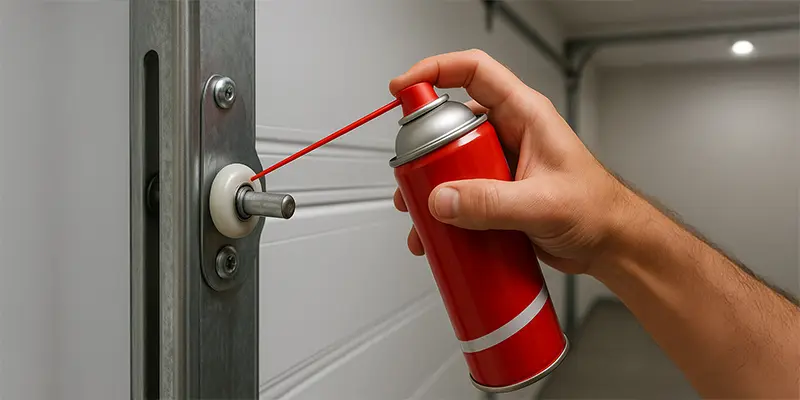
Spray a small burst of garage-door lubricant on each roller bearing.
-
Wipe excess to avoid attracting grit.
-
Lubricate hinge pins and pivot points.
-
If rollers are steel and showing rust, plan to replace them with quiet nylon rollers.
Step 4 – Service the Springs
-
For torsion springs above the door, spray a light coat of lubricant along coils from end to end.
-
For extension springs along horizontal tracks, lubricate each coil and the pulley bearings.
-
Move the door manually up and down a few times to work lubricant into joints.
Step 5 – Sound-Test and Replace Worn Rollers
-
Re-engage the opener, open the door, and listen.
-
Persistent grinding often means worn rollers.
-
Swap steel rollers for sealed-bearing nylon models:
-
Remove the hinge bracket that holds the roller stem.
-
Slide out the old roller and insert the new one.
-
Reattach the bracket securely.
-
Step 6 – Check Balance and Alignment
-
With the opener disconnected, lift the door halfway. It should stay in place without drifting.
-
If it slams shut or shoots upward, springs are unbalanced. Call a professional for tension adjustment.
-
Verify vertical tracks are plumb with the level. Adjust brackets if tracks lean inward or outward.
Step 7 – Examine the Opener
-
Tighten the chain on chain-drive units until there is about a half-inch sag at midpoint.
-
For screw-drive rails, clean old grease and apply fresh, manufacturer-approved lubricant.
-
Consider upgrading to a belt-drive opener for maximum quiet.
Step 8 – Adjust Opener Force Settings
-
With the door closed, place a two-inch block of wood under the bottom.
-
Close the door using the opener. It should reverse within two seconds of hitting the block.
-
Adjust down-force and up-force knobs to manufacturer limits for safe, quiet operation.
Step 9 – Seal and Insulate
-
Replace worn bottom seals that slap noisily on the driveway.
-
Add vinyl side-weatherstripping to prevent wind whistling.
-
Insulated panels dampen sound better than hollow sheets, so plan an upgrade if your door is still loud.
5. Preventive Tips to Keep Noise Away
-
Lubricate moving parts every three months or at the change of seasons.
-
Tighten hardware twice a year.
-
Keep tracks clear of debris and do not use grease on them.
-
Schedule professional tune-ups annually to balance springs and inspect cables.
-
Replace old metal rollers with nylon, and consider a belt-drive motor upgrade.
6. When to Call a Pro
-
Popping or banging despite lubrication
-
Frayed cables or loose torsion-spring winding cones
-
Door feels heavier than usual or opener struggles
-
Visible track bends or cracked panels
-
You prefer a comprehensive quiet-package upgrade including nylon rollers, dual-sealed bearings, and opener swap
Mr. Garage Door Repairman provides same-day noise-reduction packages across Brooklyn. Our technicians balance springs, install whisper-quiet hardware, and fine-tune openers, all while ensuring safety compliance.
7. Benefits of a Quiet Door
-
Peace and quiet – No more waking the neighborhood on early departures.
-
Longer lifespan – Reduced vibration means less wear on springs, cables, and motor gears.
-
Higher home value – A well-maintained, smooth-running door adds curb appeal.
-
Energy savings – Maintenance often includes new seals that block drafts.
-
Security – Tight, quietly moving parts indicate everything is tracked and locked properly.
8. Quick Reference Checklist
| Task | Frequency | Completed |
|---|---|---|
| Tighten bolts and hinges | Every 6 months | ☐ |
| Clean tracks | Every 3 months | ☐ |
| Lubricate rollers, hinges, springs | Quarterly | ☐ |
| Replace worn nylon rollers | As needed (3-5 years) | ☐ |
| Balance spring tension | Annually (pro) | ☐ |
| Upgrade opener to belt drive | Once | ☐ |
Print this table, tape it near your door opener, and mark tasks as you go.
Conclusion
Silencing a screechy garage door is straightforward with the right tools, time, and safety precautions. By tightening hardware, applying proper lubrication, and swapping noisy components for modern alternatives, you can transform clattering chaos into smooth, whisper-quiet motion. If the job feels daunting or you encounter worn springs, Mr. Garage Door Repairman is ready with expert diagnostics and noise-reduction upgrades. Give us a call at 718-300-4032, and reclaim peaceful entries and exits for years to come.