
Brooklyn homeowners know that temperature swings can be brutal. Winter winds whip off the Atlantic, summers bake row-house brick, and salty air infiltrates every gap. An often-ignored culprit in energy loss is the garage door. Whether your garage is attached, below a living space, or converted into a home gym, poor insulation lets conditioned air leak out and outdoor air creep in. This in-depth guide explores garage door insulation options, R-values, installation methods, and maintenance tips so you can decide how to improve comfort while lowering utility bills.
Why Insulation Matters More in Brooklyn
Urban density and shared walls
Most Brooklyn garages connect directly to kitchens, basements, or bedrooms. A drafty door becomes a giant thermal bridge, raising HVAC costs and creating cold floors or overheated rooms.
Salt-laden moisture
Marine air accelerates corrosion. Modern insulated doors use galvanized steel or composite skins that resist rust better than older single-layer metal sheets.
Noise pollution
Subway rumbles, street traffic, and delivery trucks echo through uninsulated panels. Adding insulation dampens sound as effectively as it retains heat.
Understanding R-Value and Door Construction
R-Value basics
R-value measures thermal resistance. The higher the number, the better the material slows heat flow. An average single-layer steel door has an R-value around 1 or 2. Upgraded insulated models range from R-6 to R-18.
Door layers (or “staves”)
-
Single layer: Thin steel or aluminum sheet with no insulation. Lowest cost, lowest efficiency.
-
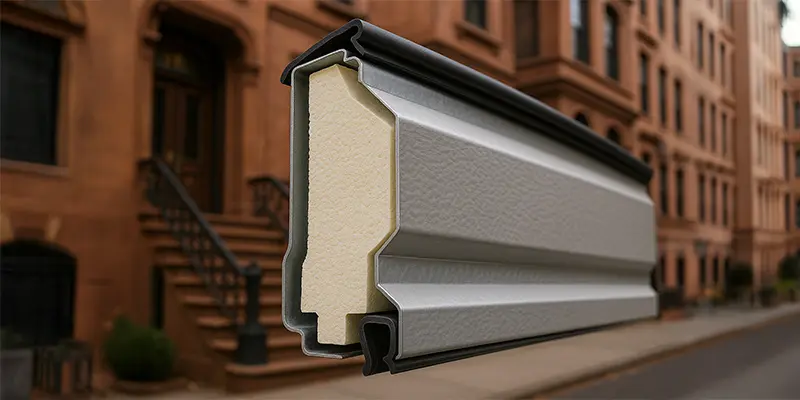
Double layer: Metal skin plus polystyrene board bonded to the interior. Mid-range price with R-5 to R-9.
-
Triple layer: Two metal skins sandwiching polyurethane foam. Highest strength, quietest operation, R-10 to R-18.
Polystyrene vs polyurethane
-
Polystyrene (rigid board) slides into place like wall insulation. Quicker to install but can leave small air gaps.
-
Polyurethane (spray-in foam) expands to fill voids, bonds to metal, stiffens the panel, and delivers 40 percent more R-value per inch.
DIY Insulation Kits vs Factory-Insulated Doors
| Option | Typical Cost | Pros | Cons |
|---|---|---|---|
| Foam board kits | $120 – $200 | Affordable quick upgrade | Lower R-value, less robust |
| Reflective bubble wrap | $80 – $150 | Lightweight, moisture resistant | Minimal thermal gain |
| Fiberglass panel kit | $150 – $220 | Decent R-value, sound dampening | Must be sealed against moisture |
| Factory-insulated door | $1000 – $2500 installed | Highest R-value, clean finish, structural strength | Higher upfront cost |
A retrofit kit can raise a thin door to roughly R-5. If you need R-10 or higher, replacing the entire door is usually more cost-effective over its lifespan.
Weather Sealing: The Unsung Hero
Insulated panels alone cannot stop drafts. Pay equal attention to:
-
Top and side vinyl seals that flex against the frame
-
Bottom rubber bulb seal to block wind, pests, and water
-
Thermal break rails between interior and exterior metal surfaces
-
Threshold ramps if your driveway slopes and water puddles near the jamb
Mr. Garage Door Repairman installs commercial-grade seals rated for Brooklyn’s freeze-thaw cycles and UV exposure.
Energy and Cost Savings
-
Reducing heat loss through an attached garage can cut household heating costs by 10 percent or more according to Department of Energy modeling.
-
Air-conditioned workshops or gyms inside the garage keep cool air in, lowering summer electricity demand.
-
Polyurethane-insulated doors add rigidity that extends spring and opener life because panels flex less, reducing mechanical wear.
-
Greater comfort often translates to higher property value and potential insurance discounts for energy-efficient upgrades.
Step-by-Step Insulation Upgrade
-
Evaluate door condition
If panels are rusty, warped, or off track, replacing the door yields better long-term value than insulating a failing shell. -
Choose insulation type
Aim for at least R-9 on attached garages. Detached structures used mainly for storage can accept lower ratings. -
Seal gaps first
Replace cracked seals, adjust track alignment, and verify the door closes snugly against framing. -
Install insulation
DIY kits require careful trimming and double-sided tape or retention clips. Avoid compressing foam, which lowers R-value. -
Test balance and opener force
Added weight changes spring tension. An imbalanced door strains the opener and can become unsafe. -
Schedule professional tune-up
Mr. Garage Door Repairman calibrates torsion springs, lubricates rollers, and sets opener force limits for smooth operation.
Maintenance Tips for Long-Term Performance
-
Dust and wipe panels every six months to prevent moisture pockets that cause rust.
-
Inspect seals each spring and autumn for cracks or flattening. Replace if daylight is visible around the edges.
-
Lubricate moving parts quarterly with silicone-based spray, avoiding overspray on insulation surfaces.
-
Rebalance springs annually. An insulated door weighing sixty pounds more than its original spec needs proper torque to avoid motor burnout.
-
Check smart opener force settings after any insulation or weather-seal changes to ensure the auto-reverse feature triggers correctly.
Environmental Benefits
Steel and aluminum insulated doors often contain 20 percent or more recycled content and can be recycled again when retired, keeping metal out of landfills. Polyurethane foam contributes minor off-gassing only during curing. Composite or wood-look insulated doors use fewer hardwood resources than solid timber models, helping preserve forests.
Additional Comfort Upgrades
-
Insulated garage windows with low-E glass to admit daylight without heat loss.
-
Smart thermostat integration to cut HVAC runtime when the garage door opens for extended periods.
-
Radiant floor mats in converted living spaces to maintain warmth even if the door lets in an occasional chill.
-
Quiet belt-drive opener that produces less vibration, complementing the noise reduction achieved with insulation.
How Mr. Garage Door Repairman Serves Brooklyn
-
On-site thermal audit using an infrared camera to pinpoint heat leaks.
-
Material samples and R-value charts so you can feel the difference in panel density.
-
Custom door fabrication including color-matched paint or wood-grain overlays.
-
Professional installation with reinforced struts, high-cycle springs, and dual-lip perimeter seals.
-
Post-install inspection covering opener safety, smart device pairing, and homeowner maintenance briefing.
Call 718-300-4032 to schedule a no-obligation consultation and take the first step toward a more comfortable, energy-efficient garage.