
Waiting for a sluggish garage door to open is more than just a minor daily frustration. When you are trying to pull your vehicle off a busy Brooklyn street, every second counts. A door that creeps up the tracks slowly leaves you blocking the sidewalk and exposes the interior of your home to the elements and potential security risks for longer than necessary.
A sudden or gradual decrease in operating speed is a clear warning sign. It indicates that your system is working harder than it should to lift the heavy panels. Ignoring a slow door often leads to a completely stalled door, burned-out motor gears, or snapped lifting cables. This comprehensive guide breaks down the normal operating speeds you should expect, the mechanical issues that cause sluggish performance, and the actionable steps you can take to restore smooth, fast access to your home.
Understanding Normal Garage Door Speeds
Before you start troubleshooting, it is important to know what a normal speed actually is. The average residential garage door opener is designed to raise and lower the door at a rate of about seven to nine inches per second. For a standard seven-foot-tall door, the entire opening cycle should take between ten and twelve seconds.
If your door takes fifteen, twenty, or even thirty seconds to fully open, there is a distinct mechanical drag on the system. It is also worth noting that many modern DC-motor openers are programmed with a “soft start and stop” feature. This means the door will intentionally start moving slowly, accelerate in the middle of the track, and slow down again right before it hits the fully open or closed position. This is a design feature meant to reduce wear and tear, not a malfunction. However, if the middle of the cycle is agonizingly slow, you have a problem that needs addressing.
The Most Common Causes of a Sluggish Garage Door
1. Friction from Lack of Lubrication
The most frequent cause of a slow garage door is simple friction. Your door system relies on dozens of moving metal parts working in unison. As the door travels, the hinges pivot, the bearings spin, and the torsion coils tighten. When these components become dry, they grind against each other. This creates massive resistance that the motor has to fight against, slowing the entire operation down. Because Brooklyn air carries salt and urban exhaust, factory grease dries out faster than you might expect.
Applying the right product to your hardware is the fastest way to eliminate this friction. Using the best garage door lubricant for your specific climate ensures the mechanism glides smoothly without attracting thick layers of urban dust. You should apply a light silicone spray or white lithium grease to the hinges and bearings every few months to maintain optimal speed.
2. Worn or Damaged Rollers
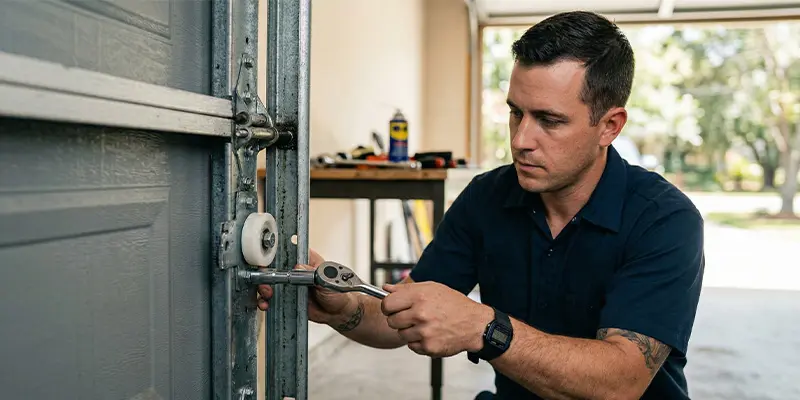
The rollers are the small wheels that guide your door up and down the steel tracks. Standard builder-grade steel rollers have unsealed bearings that easily rust and seize up over time. When a roller seizes, it no longer spins. Instead, it gets dragged forcibly along the track, creating terrible screeching noises and forcing the opener motor to pull double the weight.
Even if you have nylon rollers, they do not last forever. Eventually, these components degrade, crack, or develop flat spots. Upgrading to high-quality garage door wheels, particularly sealed nylon variants with internal ball bearings, can drastically reduce friction and restore the original speed of your system. Fresh rollers often make the door operate faster and significantly quieter.
3. Aging Springs Losing Their Lifting Power
This is the most critical mechanical issue that causes a slow door. Your automatic opener is not actually designed to lift the full dead weight of the garage door. The heavy lifting is done by the counterbalance springs mounted above the header. These springs store enormous tension when the door is closed and release it to help pull the door up.
As springs age and endure thousands of open-and-close cycles, the steel begins to fatigue. A fatigued spring loses its lifting power, making the door physically heavier. When the door becomes too heavy, the automatic opener strains to pull it up the tracks, resulting in a very slow, groaning operation. If your springs are nearing the end of their cycle life, the slow speed is a warning that they may snap soon.
4. Cold Weather and Viscosity Changes
Brooklyn winters can be brutal on mechanical systems. When the temperature drops below freezing, the grease inside your opener motor, along the tracks, and inside the roller bearings thickens. This thick, cold grease acts like glue rather than a lubricant. The motor has to work much harder to overcome this initial stiffness, resulting in a sluggish opening sequence on cold mornings.
Furthermore, cold weather causes the metal tracks and the steel springs to contract slightly. This contraction tightens the tolerances of the entire system, adding minor but noticeable drag. If your door is only slow on freezing days, cold-weather friction is the likely culprit.
5. Track Misalignment
The vertical tracks on either side of your garage door must be perfectly plumb and parallel. If your house has settled, or if you accidentally bumped a track with a heavy trash bin, the track alignment can shift. When the tracks are out of alignment, the door panels bind and wedge against the steel edges as they travel upward.
You can usually spot a severe misalignment if you see gaps between the rollers and the track on one side, or if you hear a loud popping sound as the door forces its way past a pinch point. The motor will slow down significantly as it tries to push through these binding areas.
How to Troubleshoot a Slow Door Safely
If you want to diagnose why your door is moving slowly, you can perform a few safe, simple tests without requiring specialized tools.
Step 1: The Manual Balance Test
The first step is to isolate the motor from the door to see how heavy the door actually is. Ensure the door is fully closed. Pull the red emergency release cord hanging from the central trolley. This disconnects the door from the electric opener.
Now, lift the door manually using the bottom handle. It should lift smoothly with relatively little effort. Raise the door to waist height and let go. The door should stay exactly where you left it. If the door feels incredibly heavy to lift, or if it immediately crashes back down to the floor when you let go, your springs have lost their tension. The motor is running slowly because it is lifting dead weight. You will need a professional to replace or re-tension the springs.
Step 2: Visual Inspection of Hardware
If the door passes the balance test, grab a flashlight and inspect the hardware while the door is closed. Look closely at every roller. Do they look perfectly round, or are they chipped and tilted in the track? Look at the lifting cables on the bottom corners. Are they frayed or wrapping unevenly around the drums? Any visible damage to these moving parts will cause speed issues.
Step 3: Test the Opener Solo
With the door still disconnected from the emergency release cord, press your wall button or remote control to activate the opener. Watch the trolley move back and forth along the ceiling rail by itself. Does it move quickly and smoothly? If the trolley crawls along the rail slowly even when it is not lifting the door, the problem is internal to the motor unit. You may have stripped plastic gears inside the motor housing or a failing starting capacitor.
When to Call a Brooklyn Professional
While applying basic lubrication and cleaning the tracks are excellent DIY maintenance tasks, repairing a slow garage door often requires professional intervention. The heavy panels, high-tension springs, and electrical components pose serious safety risks if mishandled.
You should call a professional technician immediately if your door fails the manual balance test, if you see frayed lifting cables, or if the vertical tracks have been bent by a vehicle impact. A trained expert can safely swap out failing springs, install fresh sealed-bearing rollers, and recalibrate the force and travel limits on your opener. By addressing the root cause of the sluggishness, you will protect your motor from burning out and restore the fast, reliable access your busy lifestyle requires.